Stream 2: To develop meaningful relationships and weave cross-cultural perspectives into practice
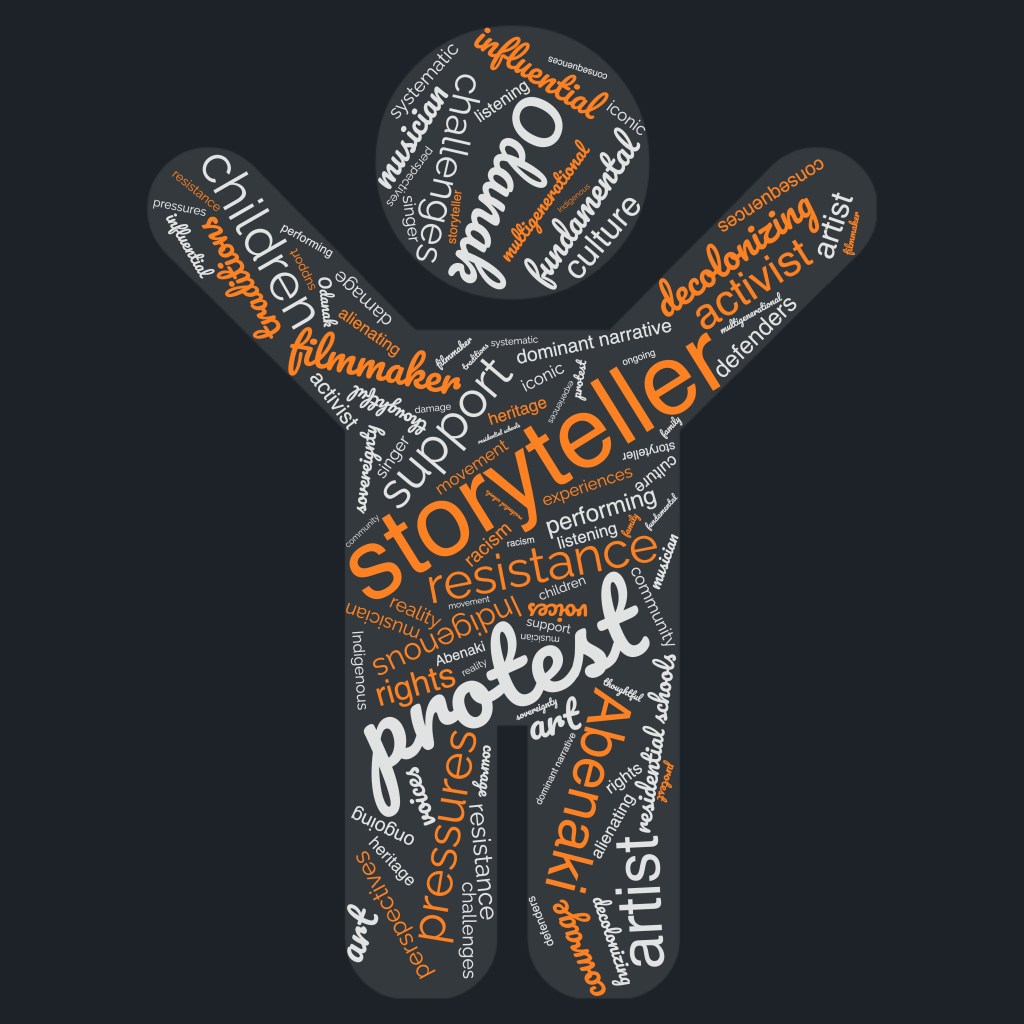
2023: Inspired by ‘The Children Have to Hear Another Story’ art exhibit based on the lifework of Alanis Obomsawin (ECED 565). The exhibit is located at the Vancouver Art Gallery, which explores the importance of Indigenous knowledge & representation, storytelling, and alternative narratives in Early Childhood Education. This word cloud represents the impact Obomsawin had on Indigenous children and families in Canada as she was able to give a voice to and represent the challenges and assumptions created by colonialism that society has inhabited and contended with (Hill, R.W., Pelag, H., & Welt, H.K., 2023).
I would like to acknowledge that I lived, worked, and played on the traditional, ancestral, and unceded territory of the xʷməθkwəy̓əm (Musqueam), Skwxwú7mesh (Squamish), and Səl̓ílwətaʔ/Selilwitulh (Tsleil-Waututh) Nations. Most of my time in the M.Ed. program was spent in North Vancouver, British Columbia, where learning about and incorporating Indigenous knowledge and practices became a significant part of both my studies and my professional practice, shifting the way I understood education and relationships. This leads me to the second stream of my journey, flowing through North Vancouver, where I came to truly understand that creating meaningful relationships is at the heart of being an ECE. Here, I was challenged to unlearn biases, embrace new pedagogies, and engage with Indigenous knowledge in ways that transformed both my practice and perspective. Anishinaabe scholar and educator Jean-Paule Restoule (2019) emphasizes that “…learning is inherently relational, and rooted in the interconnectedness between people, place, and knowledge”. This understanding deepened my commitment to fostering meaningful relationships and incorporating Indigenous ways of knowing into my practice in a way that is both respectful and transformative.
One of the roots that grew my passion for early childhood education was the relationships I built throughout the years with the children, families, and educators I worked with along the way. These relationships became more than just connections; they became the foundation of wanting to become more intentional with my work and practice. Within different theories and perspectives on thinking towards early childhood, there is always an “..emphasis on relationships between people, contexts, actions, meanings, communities, and cultural histories” (Robbins, 2005). While living in British Columbia, Indigenous ways of knowing and being were not just theoretical concepts but lived practices woven into education. Learning about the importance of reciprocity, storytelling, and connection to the land reshaped how I viewed teaching and learning. Rather than seeing knowledge as something to be transferred, I began to understand it as something to be co-created within relationships. This shift required deep reflection—recognizing and unlearning the biases shaped by my previous experiences while making space for new understandings. This stream represents the continuous process of weaving relationships into practice not as an afterthought but as an essential and intentional part of pedagogy. It highlights the significance of embracing multiple ways of knowing, honouring the stories that shape us, and recognizing that education is not just about what we teach but how we engage with those around us.

This presentation on creating culturally responsive and inclusive spaces within an early learning setting is directed towards my team at the center I work for, called ‘Kinderbees Early Learning Center.’ Located in Lower Lonsdale, North Vancouver, Kinderbees Early Learning is a private child care center that provides care for children between the ages of 0-5 years old. I believe that as educators and advocates for children’s early childhood learning and development, we must recognize and embrace the rich diversity that is present within our classrooms. By doing so, we not only create inclusive spaces but also lay the foundation for educational environments where every child can thrive. Please also see the attached paper which looks into my thought process and a road map for my presentation.
The foundation of a child’s learning journey lies in the quality of relationships they develop throughout their childhood (Bronfenbrenner, 1979). This box of memories holds letters, pictures, artifacts, and mementos that I have collected over the years of teaching in South Korea. These items represent my memories of my students and my own experiences as an educator. In the collage, there is a photo of one of my students’ hands on mine. On our way to a field trip, she sat beside me on the bus. At the time, the child was 3 ½ years old (International Age) and she had never been on a bus. It was all so new. She tapped me on the shoulder and motioned her hand open. I opened my hand, mirroring her, and she gently placed her tiny hand on top of mine. When I tried to close it, she stopped me with her other hand and looked out the window. She didn’t want me to hold her hand but to know that I was just there with her. As an educator, I strive to build trust and confidence between myself and the children and families that I work with.

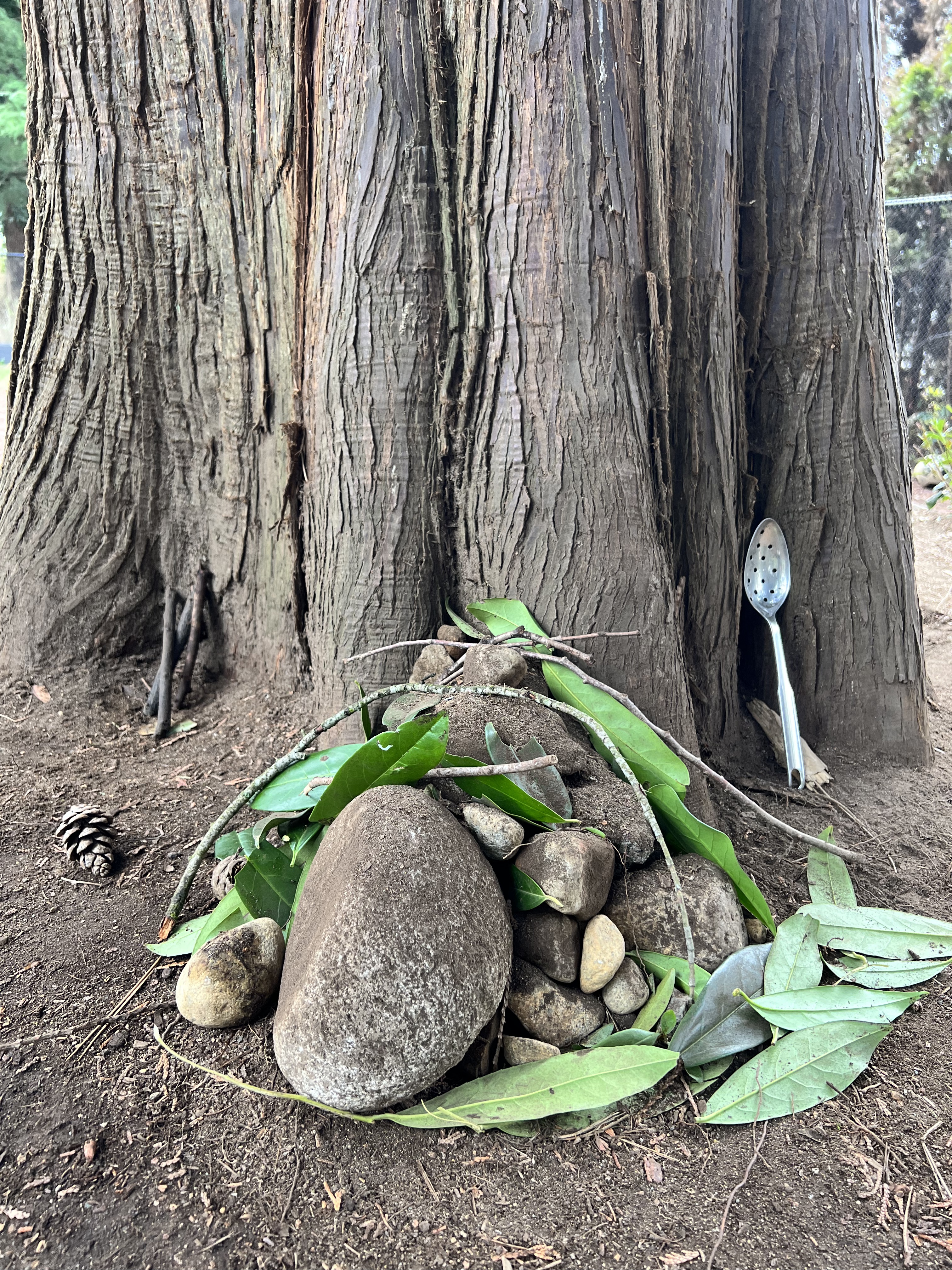
This collection of visual journals, taken from the course ECED 565D’s weekly discussions, reflects the interwoven nature of relationships, creativity, and pedagogy within Early Childhood Education. Rooted in my second stream—developing meaningful relationships and weaving them into practice—these visual explorations showcase how arts-based pedagogies create spaces for connection, dialogue, and shared meaning-making. Through material encounters and living inquiry, these journals highlight the importance of relationality in learning, demonstrating how artistic expression fosters deeper engagement with children, educators, and the environments we co-inhabit.
 ECED 590: Graduation Portfolio by Jeninna Calderon