
About Jeninna
Throughout the program, I aim to share my experiences and insights as my journey has shaped me into who I am today. During my undergrad studies, I took my time researching and looking into different Masters programs and found myself drawn to the UBC M.Ed. ECE cohort program as it aligned with what I was looking for. Through UBC, I was able to pursue education while working abroad. As I moved through different countries and cities, I realized how deeply interconnected educational practices are with the socio-cultural contexts they exist within. Each new environment offered distinct challenges and insights, reshaping my understanding of Early Childhood Education and my awareness of how culture, community, and systems influence child development. These reflections are woven into this project, representing my evolving journey of learning, unlearning, and growth across diverse educational landscapes.
Educational Philosophy & Image of the Child
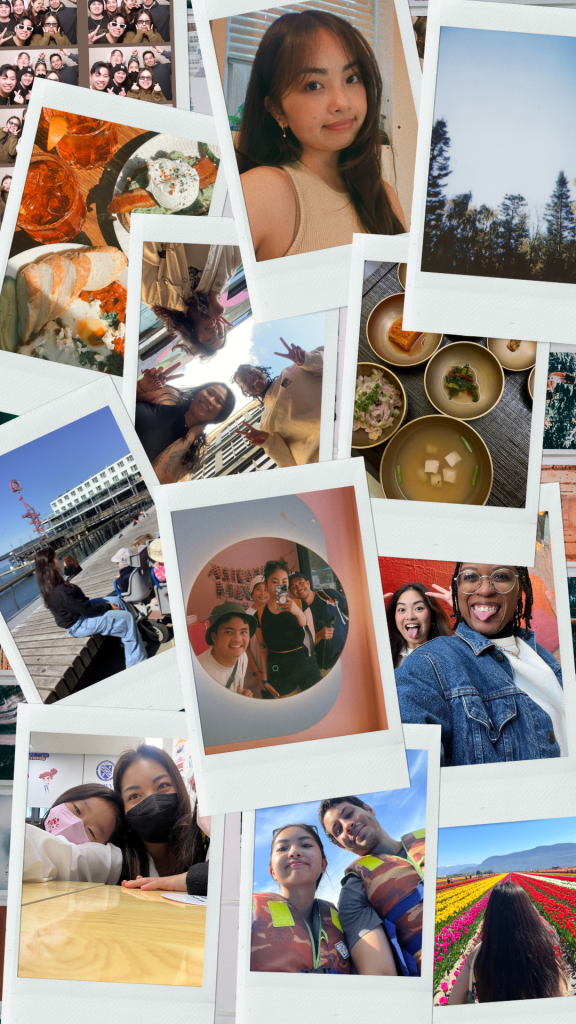
Our image of the child greatly influences our teaching philosophies and pedagogical practices (Moss, 2019). How we perceive and understand children shapes how we interact with them, design educational programs, and create learning environments. This understanding of the child is deeply rooted in our cultural, social, and personal beliefs, impacting every aspect of teaching and learning. To showcase this, I decided to create a mood board of what has shaped my image of the child. The purpose of a mood board is to inspire oneself and to visualize and remind oneself of what goals one would like to achieve. Throughout this program, we have continuously been unravelling and adding onto the layers of how each of us is and what made us want to be educators and teachers of tomorrow. At first glance, you will notice the qualities scattered across the board: Soulful, Curious, Creative, Diverse, Capable, and Resilient. These are the qualities I think of when asked to describe who and what my image of the child is. However, when examined closely, behind each word is a photo that shows bits and pieces of my life: family, friends, students, colleagues, and my environment. Like Bronfenbrenner’s Ecological Systems Theory (1979), each photo represents a ‘system’ which has heavily influenced and developed the educator I am today. The mood board represents core memories made within my past and present, hopefully leading to what I want to achieve in the future.
My educational philosophy is based on my experiences, relationships and my core values and beliefs as an individual. Being in this field for a decade has been a transformative journey, and my role and image as an educator is to guide and inspire learners to explore, question, and apply knowledge. I embrace a child-centred approach that recognizes the diverse needs, backgrounds, and learning styles of each child. I strive to create an inclusive and engaging learning environment where curiosity is nurtured, critical thinking is cultivated, and a sense of lifelong learning is instilled. As seen in my artifacts, I hold the conviction that children are naturally resilient, curious, and inherently capable of profound growth. Guided by this belief, my teaching philosophy revolves around fostering sustainable environments and meaningful relationships that empower children to reach their full potential. The power of relationships has always been the center of everything I do and have done as an educator. The connections between educators, children and their families, as well as peer interactions, are pivotal in a child’s learning experience. I am dedicated to building trusting and nurturing relationships by creating an atmosphere of mutual respect, trust, and support. These relationships serve as the foundation for learning to flourish, allowing each child to feel valued, heard and understood.

Bringing Theory to Life
Bronfenbrenner’s Ecological Systems Theory (1979) is a good starting point for my graduating portfolio. Bronfenbrenner highlights the interplay between biology and environment in shaping development, which is strongly connected to my journey and experiences. My interest in cross-cultural early childhood education developed from a young age, growing up in different environments and cultures. I was born in the Philippines, spent my early childhood in Qatar, and grew up in Canada. During my undergrad at Mount Royal University, I got the opportunity to work with the Association of Early Childhood Educators of Alberta (AECEA), and because of this experience, I knew that I wanted to become a part of something bigger and to continue advocating for the field of Early Childhood. This led me to research different leadership positions I could potentially assume within the field of early childhood.
Moving to South Korea, I was educated and trained in Western ideas and ways of teaching, and bringing that into a completely different culture and context was very interesting. Just before I got accepted into the M.Ed. program, I got my first job in leadership as the Academic Coordinator for the Early Childhood Program at a Korean-English Academy. From there, I wanted to learn not only to become an effective leader but also to be an intentional and thoughtful educator/leader. Reflecting on my experiences, I see how the notion of “systems” (Bronfenbrenner, 1979) connects and intersects with my personal and professional learning journey. The rationale behind this project is to reflect my understanding of growth and leadership in education as non-linear. Rather, it is dynamic and requires reflection and adaptability. Using the metaphor of the ‘River’s Flow’, this project emphasizes that learning is an ongoing and interconnected journey, interacting with the landscapes we traverse/encounter and the people we meet along the way.
 ECED 590: Graduation Portfolio by Jeninna Calderon